



Table of Contents
Ready to See Results?
From strategy through execution, Atlantic Health Strategies integrates compliance, operations, and growth into durable, measurable results. Let’s put our expertise to work for your organization.
The short answer: what Ohio did, when it took effect, and why operators care
On December 12, 2025, the Ohio Board of Pharmacy issued emergency rule OAC 4729:9-1-01.1, making it illegal to sell, possess, or distribute kratom-related derivatives in Ohio, with a narrow carveout for products composed solely of mitragynine (natural kratom leaf in its vegetative form). The rule targets synthesized and concentrated derivatives, most notably 7-hydroxymitragynine (7-OH).
Per the Board’s consumer and retailer notice, the emergency rule took effect December 12, 2025 and names the covered compounds including 7-hydroxymitragynine (7-OH), mitragynine pseudoindoxyl, dihydro-7-hydroxy mitragynine, and 7-acetoxymitragynine. The emergency ruling runs 180 days and expires on June 10, 2026.
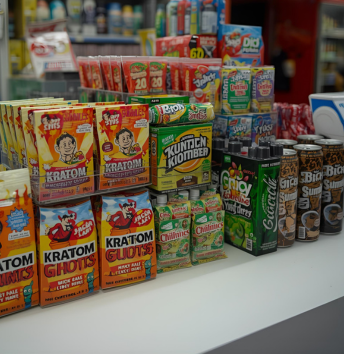
If you run a treatment center in Ohio, this is not a theoretical policy update. Patients presenting for admission may have been using 7-OH gummies, tablets, or vape liquids purchased at gas stations weeks before the ban dropped. Intake staff, medical directors, and utilization management reviewers should treat 7-OH as an opioid on the assessment side and adjust ASAM Criteria 4th Edition level-of-care determinations accordingly.
Why DeWine and the Board of Pharmacy moved (and why RFK Jr. Is in the story)
Governor Mike DeWine first asked the Board to schedule kratom compounds in August 2025, then paused. DeWine originally made this request in August, but paused his call for a kratom ban after talking with Health and Human Services Secretary Robert F. Kennedy Jr. He renewed the request on December 11, 2025. The Board issued the emergency rule the next day.
DeWine drew the distinction that matters for operators. He separated immediate action on synthetic derivatives from the slower process for natural leaf. “While there is a clear path to take action on synthetic kratom, I still have deep concerns about natural kratom, given the harms, including fatalities, attributed to it,” DeWine said.
Then the Board kept moving. Per the Ohio State Moritz College of Law Drug Enforcement and Policy Center, the Board’s actions in late 2025 and early 2026 continued the momentum toward permanent scheduling. Two named regulators. One product category. A window of less than 30 days from executive request to emergency-rule enactment. Compliance officers should read that timeline as a signal about surveyor focus in Ohio for the next 12 months.
The data behind the rule: Ohio deaths, national exposures, FDA findings
Compliance leaders writing policy or briefing clinical leadership should commit these numbers to memory.
- Ohio overdose deaths. Preliminary data from the Ohio Department of Health documented more than 200 unintentional overdose deaths between 2019 and 2024 from synthetic kratom, which comes in everything from tablets to edibles to drinks.
- National poison control exposures. According to data from poison control centers, from January to July 2025, there have been 1,690 exposure calls involving kratom, a significant increase from 2024 exposure calls.
- User base. The 2023 National Survey on Drug Use & Health estimates there are 1.6 million annual kratom users in the United States.
- Federal enforcement. On December 2, 2025, the U.S. Marshals Service, with support from FDA, seized product from three firms. The U.S. Marshals Service seized approximately 73,000 units of 7-hydroxymitragynine (7-OH) products, valued at roughly $1 million, from three firms in Missouri.
- FDA adverse-event signal. The DEA’s FAERS query showed the total count for 2025 increased to 66 with 17 new cases already reported for 2026; of the 86 cases in the database, 79 were reported as serious, including death, with 9 cases resulting in death.
The pharmacology drives the regulatory urgency. FDA Commissioner Marty Makary, announcing the July 29, 2025 scheduling recommendation to the DEA, said: “7-OH binds to the mu receptor, which means, scientifically by definition, it is an opioid”. Makary added that “7-OH is an opioid that can be more potent than morphine”. The FDA notes that 7-OH is a naturally occurring alkaloid but only a minor constituent comprising less than 2% of the total alkaloid content in natural kratom leaves, while demonstrating substantially greater mu-opioid receptor potency than mitragynine and morphine. Medical directors and UM reviewers should quote that agency language directly in charting. It holds up in an appeal.
Five concrete changes for Ohio treatment center operations
If you run a treatment center in Ohio, the ban changes intake, clinical, and compliance work in five concrete ways. Read this as a checklist, not a think piece.
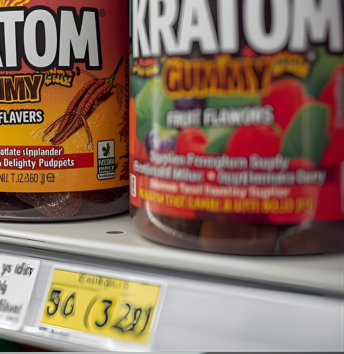
- Intake screening. Intake staff should add 7-OH, mitragynine pseudoindoxyl, dihydro-7-hydroxy mitragynine, and 7-acetoxymitragynine to substance-use history questions. Patients will not volunteer “kratom gummies” unless intake asks by product and brand. Makary noted 7-OH is increasingly found in vapes, candies, gummies and drinks sold at smoke shops, gas stations and convenience stores across the U.S.
- ASAM level-of-care determinations. Under the ASAM Criteria 4th Edition, a patient presenting with dependence on concentrated 7-OH looks pharmacologically like an opioid case, not a supplement discontinuation. Clinical leaders should assess withdrawal severity accordingly and place patients at the appropriate withdrawal-management level of care.
- Medical director protocols. Every medical director should have a written protocol for 7-OH withdrawal. There is no FDA-approved treatment for 7-OH use disorder. Mitragynine pseudoindoxyl, MGM-15, and MGM-16 abuse carry a high risk of cardiotoxicity, hepatic and renal toxicity, respiratory depression, neurological effects, and physical dependence and withdrawal.
- Contraband policy. As of December 12, 2025, covered kratom derivatives are illegal to possess in Ohio. Compliance officers should update EOC tour language, patient search protocols, and staff training, and treat this as a controlled-substance issue on the property.
- Payer readiness and documentation. UM reviewers will see a rise in 7-OH-related admissions and may not have a diagnosis code they like. Document opioid-receptor activity, cite the FDA’s July 2025 scheduling recommendation, and reference OAC 4729:9-1-01.1 in medical necessity notes. A single residential withdrawal management admission can run $800 to $1,500 per patient per day in billed charges. If your UM team cannot defend medical necessity because the substance is not on standard payer lists, you eat the denial.
Federal action is not standing still either. On July 15, 2025, the FDA issued warning letters to seven firms marketing 7-OH products as dietary supplements or unapproved drugs, covering tablets, gummies, drink mixes and liquid shots.
What happens next (and what other states should watch)
Two tracks are running in parallel in Ohio. The Board of Pharmacy’s emergency rule expires June 10, 2026, and the Board has stated it will propose a permanent rule during that window. Separately, Ohio Sen. Bill Blessing, R-Colerain Township, introduced Ohio Senate Bill 299, which would regulate natural kratom products and ban the synthetic version; the bill has had sponsor testimony, and Ohio Republican State Reps. Mike Odioso and Brian Lorenz recently introduced Ohio House Bill 587, a companion bill. SB 299 would prohibit synthetic 7-hydroxymitragynine, limiting it to no more than one milligram in products, and would restrict kratom sales to adults 18 and older.
Operators outside Ohio should watch this closely. On July 1, 2026, the Drug Enforcement Administration announced the start of the temporary scheduling process under the Controlled Substances Act and through a Notice of Intent (NOI) for 7-hydroxymitragynine (7-OH) above a proposed specified threshold, as well as three synthetic 7-OH derivatives (Mitragynine pseudoindoxyl, MGM-15, and MGM-16) not naturally occurring in the kratom plant. The threshold is set at 0.05% 7-OH for the kratom plant, and for synthetic or processed articles the threshold is 0.05% 7-OH or 1 milligram of 7-OH per article. Each notice stated that a temporary scheduling order would be published on or after August 5, 2026, would take effect on the date published, and would remain in effect for two years, subject to a possible one-year extension.
Florida had already moved. Florida Attorney General James Uthmeier filed an emergency rule classifying certain concentrated forms of 7-hydroxymitragynine as a Schedule I controlled substance in Florida, making it illegal to sell, possess or distribute certain concentrated forms of 7-OH in the state. Multi-site operators in Florida, Tennessee, and Georgia should assume regulators in their states feel pressure to move next.
If you run a multi-site behavioral health operation, put your compliance program on a 90-day cycle to track state-by-state kratom and 7-OH scheduling, and brief clinical leadership monthly. Operators who move first on training, intake protocols, and documentation will not get caught flat-footed on a mock survey.
Frequently asked questions
When did Ohio’s kratom ban take effect, and how long does it last?
The Ohio Board of Pharmacy’s emergency rule (OAC 4729:9-1-01.1) took effect December 12, 2025 and runs 180 days, expiring on June 10, 2026. The Board has stated it will propose a permanent rule during that window to continue the prohibition on covered kratom-related derivatives.
Is all kratom illegal in Ohio, or just 7-OH and synthetic derivatives?
The rule prohibits kratom-related derivatives, including 7-hydroxymitragynine (7-OH), mitragynine pseudoindoxyl, dihydro-7-hydroxy mitragynine, and 7-acetoxymitragynine. Products composed solely of mitragynine, including natural kratom leaf in its vegetative form, are the current exception. Governor DeWine has publicly said he still wants natural kratom addressed, but through the regular deliberative rulemaking process with hearings and testimony.
How should a behavioral health treatment center adjust intake and clinical protocols for 7-OH?
Clinicians should treat 7-OH as an opioid on assessment. FDA Commissioner Marty Makary has stated that 7-OH binds to the mu opioid receptor and, by definition, is an opioid, and that it can be more potent than morphine. Intake staff should screen by product name (gummies, tablets, vapes, drink shots); medical directors should have a written withdrawal-management protocol; and utilization management documentation should reference the FDA’s July 29, 2025 scheduling recommendation and OAC 4729:9-1-01.1 to support medical necessity for the appropriate ASAM Criteria 4th Edition level of care.
Which other states have restricted kratom, and where is federal action headed?
Florida moved via an emergency rule from Attorney General James Uthmeier in 2025 classifying certain concentrated forms of 7-OH as a Schedule I controlled substance under state law. Federally, on July 29, 2025 the FDA recommended DEA schedule 7-OH under the Controlled Substances Act. On July 1, 2026, DEA announced two Notices of Intent to temporarily place 7-OH above a specified threshold (0.05% or 1 mg per article), along with mitragynine pseudoindoxyl, MGM-15, and MGM-16, into Schedule I, with the temporary orders expected to take effect on or after August 5, 2026.
References
- HHS: FDA Takes Steps to Restrict 7-OH Opioid Products Threatening American Consumers (July 29, 2025)
- FDA: FDA Seizes 7-OH Opioids to Protect American Consumers
- FDA: Hiding in Plain Sight: 7-OH Products
- FDA and Kratom
- DEA: DEA to Temporarily Schedule 7-OH and Related Substances to Protect Public Safety (July 1, 2026)
- Federal Register: Temporary Placement of 7-Hydroxymitragynine Above a Specified Threshold in Schedule I
- Federal Register: Temporary Placement of Mitragynine Pseudoindoxyl, MGM-15, and MGM-16 in Schedule I
- Congressional Research Service: Temporary Control of 7-OH and Related Substances Under the CSA
- Ohio Capital Journal: Ohio Board of Pharmacy Issues Emergency Ruling Banning Most Kratom Products for 180 Days
- Ohio State Moritz College of Law: Regulating Kratom in Ohio and Beyond
- Ohio Legislature: Senate Bill 299 (136th General Assembly)
- FDA: Statement on Florida Restriction of 7-OH Opioid Products