



Table of Contents
Ready to See Results?
From strategy through execution, Atlantic Health Strategies integrates compliance, operations, and growth into durable, measurable results. Let’s put our expertise to work for your organization.
The Short Answer on Iowa in 2025
Behavioral health licensure in Iowa now runs through the Iowa Department of Health and Human Services (Iowa HHS) under the new Behavioral Health Service System (BHSS), which went live July 1, 2025, with seven behavioral health districts and a single statewide Administrative Service Organization: the Iowa Primary Care Association (Iowa PCA). If you built your Iowa strategy on the old 13 mental health and 19 substance use regions, that map is gone.
Governor Kim Reynolds signed House File 2673 on May 15, 2024, at the Foundation 2 Crisis Services headquarters in Cedar Rapids. At the signing, Reynolds framed the intent bluntly: “Today, we align Iowa’s 32 separate mental health and substance use service regions into one, unified behavioral health system.” Iowa HHS then selected Iowa PCA as the statewide ASO on December 13, 2024, and the launch hit the July 1, 2025 go-live on schedule.
Founders and PE-backed buyers keep asking me the same question. Is Iowa a buy, build, or wait? The honest answer depends on what you already operate, the level of care you want to deliver, and how much pre-revenue runway you can carry while Iowa HHS works through application volume. What is not in dispute: demand is real, the state needs capacity, and the licensure pathway is workable if operators respect it.
The Regulators Who Actually Matter
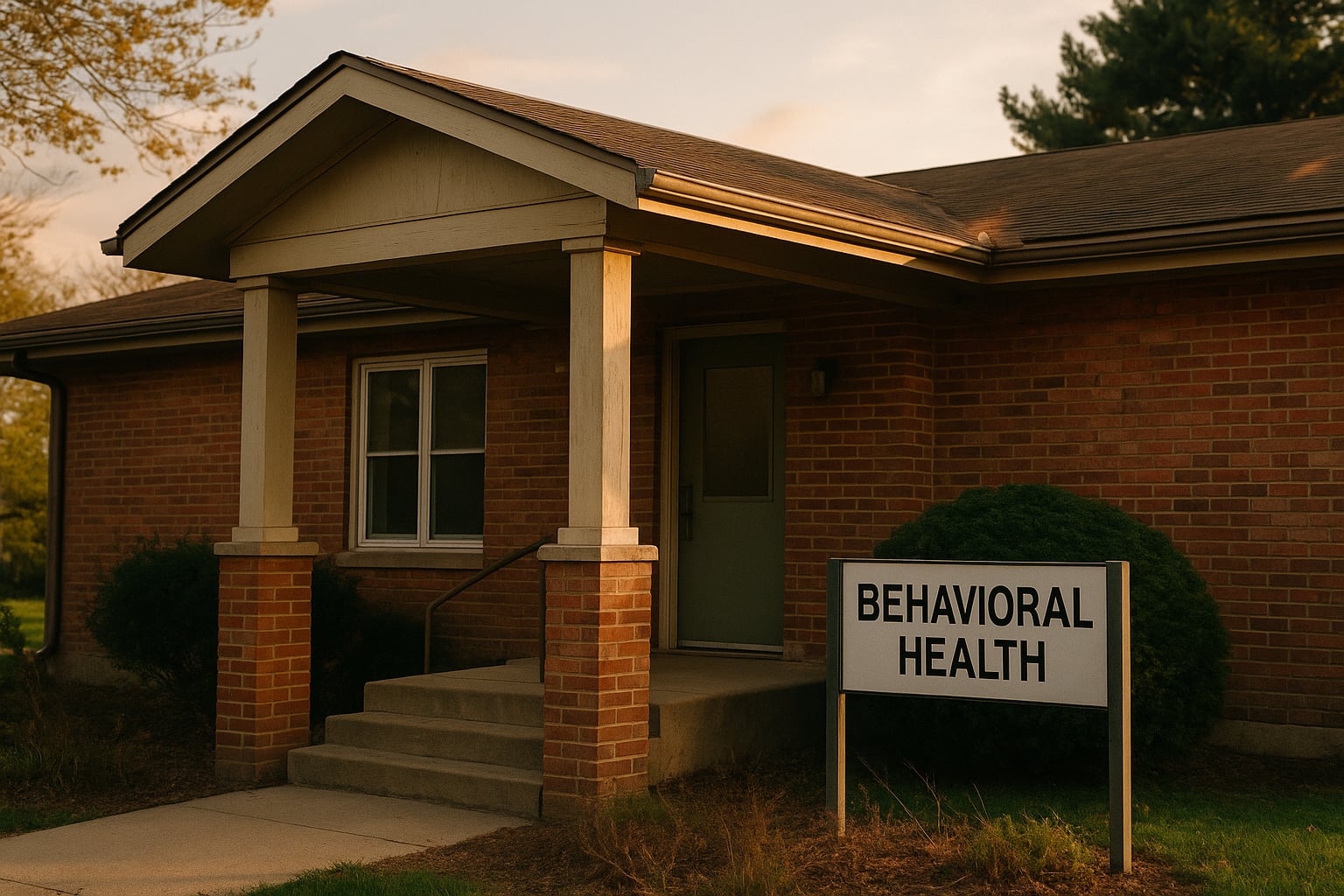
For behavioral health licensure in Iowa, the lead agency is the Iowa Department of Health and Human Services, specifically the Behavioral Health, Disability, and Aging Services division. Iowa administrative rules live under Iowa Administrative Code 441, and Iowa HHS staff run accreditation reviews under IAC 441 Chapter 24.
If you operate residential SUD treatment, you are also accountable to SAMHSA expectations under 42 CFR Part 2. Take any federal funding through the SUPTRS (formerly SAPT) block grant and the scrutiny tightens.
Accreditation is a parallel track. Iowa expects nationally recognized accreditation from CARF or The Joint Commission, depending on the service line, for most licensed behavioral health programs. Sequencing your accreditation survey relative to your license application is one of the most commonly mishandled pieces of the entire process. Operators in other states have burned 90 to 120 days because the survey window and the state license effective date were sequenced wrong.
Add the DEA if you are running MAT, the Iowa Board of Pharmacy if you are dispensing, and the Iowa Insurance Division once you start commercial payer contracting. Iowa HHS also requires that all Behavioral Health and Disability Service providers must register in the new SNMIS claim reimbursement system as soon as possible to ensure they are ready to submit claims beginning July 1, 2025, and Iowa PCA now handles district-level provider contracting through Community Based Organization contracts. The regulator map is not a single line. It is a network.
What We See Across 25-Plus Licensure Projects
Over the last 24 months, AHS has closed more than 25 behavioral health licensure projects across Florida, Colorado, Texas, Tennessee, Arizona, and Virginia. Different state agencies, different forms, different surveyor cultures. The patterns repeat.
Three things consistently determine whether a licensure project lands on time:
- Real estate and EOC readiness. The physical plant either passes the environment of care tour or it does not. Fire marshal sign-off, ADA, life safety. Founders see the longest delays here in every state.
- Policy architecture matched to the actual service. Generic policy templates pulled off the internet get flagged on the first review. Iowa HHS, like Colorado BHA and Florida DCF, reads for whether your policies match the level of care you are actually proposing under the ASAM Criteria, 4th Edition.
- Clinical leadership in place before you file. Named, credentialed, and verifiable. States have stopped accepting “to be hired” on the application for medical director and clinical director roles.
The cost of getting any one of these wrong is not theoretical. A 60-day delay on a 30-bed residential program at a blended rate north of $750 per patient day is real money the founder rarely modeled.
How AHS Approaches Iowa
Our work in Iowa has included market entry analysis, regulatory mapping for operators evaluating expansion, and M&A diligence on Iowa-based targets where a buyer needed a clear read on what they were actually acquiring under the new HHS structure. We help leadership teams understand what Iowa HHS will expect once they file, and where the timeline risk sits.
For operators ready to file, we run the licensure project the same way we run them everywhere else. A defined kickoff. A regulatory map specific to the service line and county. Policy and procedure build that matches the proposed level of care. EOC readiness coordination with the landlord and general contractor. Mock survey before the state visit. And a payer readiness workstream running in parallel so day one of licensure is not day one of revenue cycle problems.
The Iowa-specific nuances get layered onto that operational backbone: district contracting through Iowa PCA, BHSS provider designation, SNMIS enrollment, and the interplay between licensure and Medicaid enrollment through Iowa Medicaid. The framework is new. The execution discipline is not.

If You Are Looking at Iowa Right Now
Iowa’s capacity gap is not abstract. The Treatment Advocacy Center’s most recent state-bed analysis ranked Iowa 51st in the nation for state psychiatric beds, comparing all 50 states and Washington D.C., with the group recommending at least 50 state-run psychiatric beds per 100,000 people and Iowa reporting just two. On the SUD side, SAMHSA’s 2023 National Survey on Drug Use and Health found that among the 48.5 million people aged 12 or older who had a SUD in 2023 and were therefore classified as needing substance use treatment, 15.6 percent (7.1 million people) received treatment. That is the demand backdrop new operators are walking into.
The funding is real too. Iowa HHS has approximately $250 million in “safety net” dollars to cover the first year of disability and behavioral health services for those who are uninsured or cannot get services covered through their insurance plan, including $146 million for behavioral health services and $56 million for disability services. Under the enabling legislation, each ASO is capped at 7.0% of funding in a given fiscal year on administrative costs. That is a durable line of funding, not a one-time pilot.
The volume signal is showing up in the year-one numbers. Iowa HHS reported that between July 1, 2025 and March 31, 2026, the BHSS connected nearly 24,000 Iowans through System Navigation, handled more than 53,000 contacts through 988, served over 45,000 individuals through Certified Community Behavioral Health Clinics, and generated approximately $5 million in administrative savings. Iowa HHS Principal Deputy Director Larry Johnson put it plainly at the one-year mark: “Over the past year, providers, community partners, and Iowa HHS staff have worked together to build a more connected, person-centered system.”
Operators who will win in Iowa over the next 24 months treat the new HHS framework as an opportunity, not a hurdle. Founders who build relationships with Iowa PCA and the right district advisory council actually move faster.
If you want to talk through Iowa specifically, whether that is a market entry question, a diligence question on an Iowa target, or a full licensure engagement, talk to us before you sign a lease or an LOI. Iowa is open for serious operators. It is not open for sloppy ones.
Frequently asked questions
Who licenses behavioral health facilities in Iowa in 2025?
The Iowa Department of Health and Human Services, through its Behavioral Health, Disability, and Aging Services division, is the lead licensing and accreditation authority for behavioral health providers, with rules codified primarily in Iowa Administrative Code 441. SUD providers also operate under federal 42 CFR Part 2 confidentiality requirements administered by SAMHSA. On December 13, 2024, Iowa HHS designated the Iowa Primary Care Association as the statewide BH-ASO handling district-level contracting for safety-net services.
What changed when Iowa’s Behavioral Health Service System went live on July 1, 2025?
House File 2673, signed May 15, 2024, consolidated Iowa’s previously separate mental health, substance use, gambling, and tobacco service systems into one statewide Behavioral Health Service System organized around seven behavioral health districts, replacing the prior 13 mental health and 19 substance use regions. Iowa HHS contracted Iowa PCA as the statewide BH-ASO to handle district-level coordination and provider contracting for safety-net services. Disability services moved separately to the Aging and Disability Services division through Disability Access Points, which served 4,161 unique individuals in the system’s first year.
How do providers get paid under the BHSS?
Reimbursement for BHSS safety-net services flows through Iowa HHS’s Safety Net Management Information System (SNMIS) on a statewide fee schedule effective July 1, 2025. Iowa HHS states that to submit claims through SNMIS, providers must be enrolled and in good standing with Iowa Medicaid and any applicable licensing or accreditation bodies. If a claim is denied, the provider has 45 days to appeal. Under the enabling legislation, each ASO is capped at 7.0% of funding in a given fiscal year on administrative costs.
Do I need CARF or Joint Commission accreditation to operate in Iowa?
For most licensed behavioral health programs, yes. Iowa expects nationally recognized accreditation from CARF or The Joint Commission, depending on service line, alongside state licensure under IAC 441 Chapter 24. Sequencing matters. Aligning the accreditation survey window with the state license effective date is one of the most commonly mishandled steps and can cost operators 90 to 120 days if done in the wrong order.
References
- Office of the Governor: Gov. Reynolds Signs HF 2673, Behavioral Health Alignment (May 15, 2024)
- Iowa HHS: Selection of Iowa Primary Care Association as statewide BH-ASO (December 13, 2024)
- Iowa HHS: State of Iowa Launches New Behavioral Health and Disability Services Systems (July 1, 2025)
- Iowa HHS: Behavioral Health Service System overview and SNMIS enrollment requirements
- Iowa HHS: One-year anniversary of Behavioral Health and Disability Service Systems (July 1, 2026)
- Iowa Legislative Services Agency: Behavioral Health and Disability Services Brief
- Iowa Public Radio: Iowa’s new behavioral health system is now in effect
- NACo summary of SAMHSA 2023 National Survey on Drug Use and Health
- SAMHSA: 2023 NSDUH Annual National Report
- CBS News / KFF Health News: For-profit companies open psychiatric hospitals in areas clamoring for care
- WHO13: Iowa ranks 51st in the nation for state psychiatric beds (Treatment Advocacy Center)