



Table of Contents
Ready to See Results?
From strategy through execution, Atlantic Health Strategies integrates compliance, operations, and growth into durable, measurable results. Let’s put our expertise to work for your organization.
The checklist, stated plainly
A HIPAA compliance checklist for a behavioral health treatment center layers the HIPAA Privacy Rule (45 CFR Part 160 and Subparts A and E of Part 164), the HIPAA Security Rule (45 CFR Part 164, Subpart C), and the Breach Notification Rule (45 CFR §§ 164.400-414) on top of 42 CFR Part 2 for SUD records and the applicable state mental health confidentiality statute. It is not a one-time document. It is an ongoing program evidenced by a current Security Risk Analysis, workforce training logs, signed Business Associate Agreements, incident response testing, and a Notice of Privacy Practices that patients actually receive.
If an investigator from the HHS Office for Civil Rights (OCR) walked in tomorrow, the file should produce proof, not promises. The 2024 OCR Annual Report to Congress is blunt about where this goes sideways: OCR initiated investigations into all 663 large breach reports and two additional smaller breach incidents, resolved most through voluntary corrective actions, and completed 785 breach investigations during 2024, including 12 cases resolved through settlement agreements, corrective action plans, and financial penalties. OCR collected $7,813,831 in penalties connected to data breach investigations and an additional $950,000 related to a separate investigation initiated following media reporting of a breach incident.
For a behavioral health operator, the binder has to hold up under two different stress tests: a state surveyor from an agency like Florida AHCA or Texas HHSC during a licensure survey, a Joint Commission or CARF reviewer during accreditation, and a buyer’s compliance diligence team during a transaction. Different audiences, same documents.
The administrative, physical, and technical safeguards file
The Security Rule requires three safeguard categories. The National Institute of Standards and Technology (NIST) published NIST SP 800-66 Revision 2 as the implementation guide, and OCR cites it when scoping investigations. Treat it as the rubric.
Administrative safeguards (what AHS clients keep in the binder):
- A current Security Risk Analysis (SRA) with a dated executive sign-off, a risk register, and remediation tickets closed out of the EMR help desk.
- Written policies for workforce access, termination, sanctions, and contingency planning.
- Training logs for every workforce member, including PRN clinicians and the overnight BHT who started last Tuesday. Date, module, score, signature.
- A designated Privacy Officer and Security Officer with written job descriptions.
Physical safeguards: badge logs for the admin suite where records are stored, locked server rooms, disposal records for anything with PHI (including the sticky notes on the UR desk), and documented EOC walkthroughs.
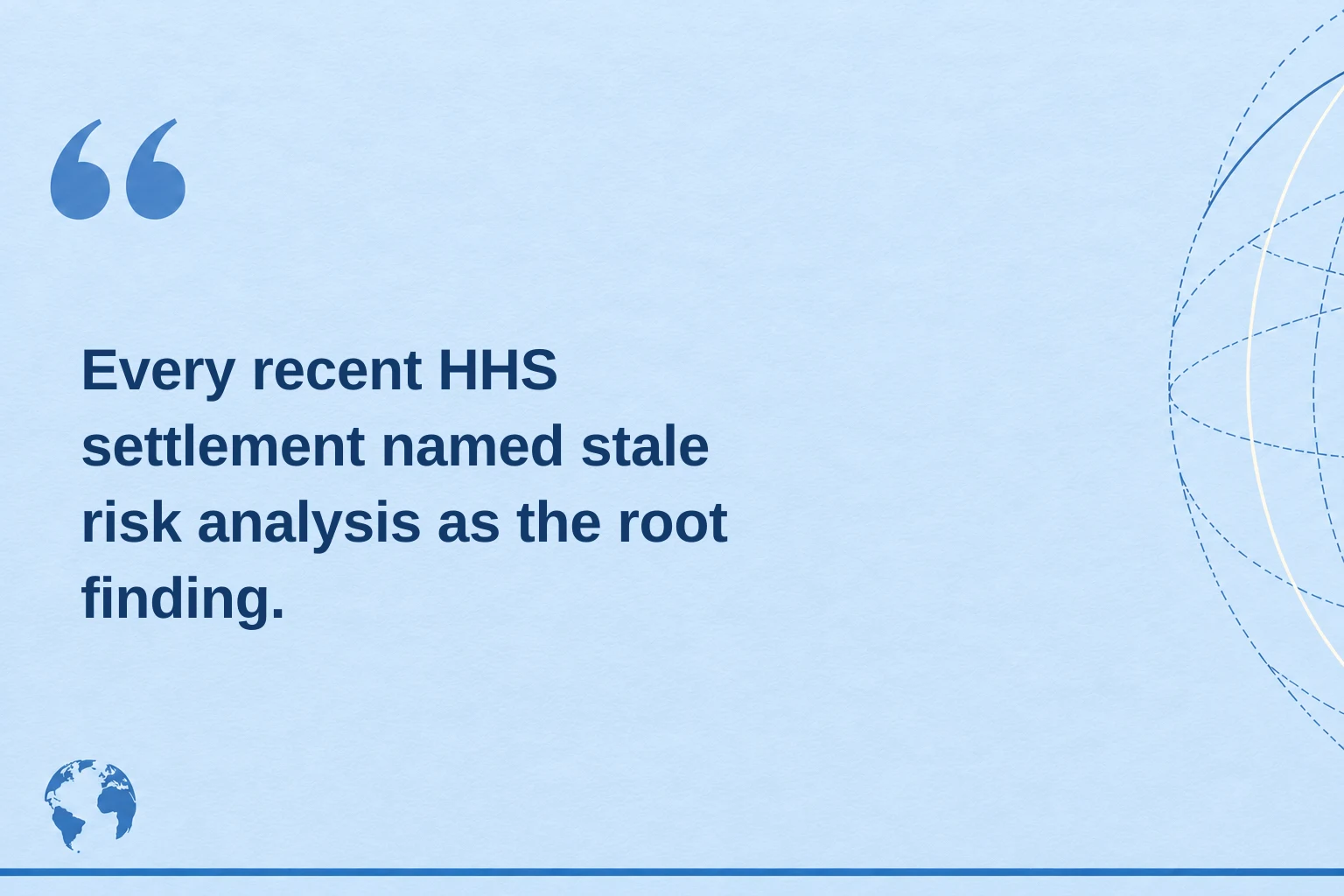
Technical safeguards: unique user IDs, automatic logoff, audit controls, encryption at rest and in transit, and MFA on the EMR. The pattern in enforcement is unmistakable. Every recent HHS resolution agreement citing a Security Rule violation has named “failure to conduct an accurate and thorough risk analysis” as a root finding, a pattern that holds across the 2024 Gulf Coast Pain Consultants $1.19M CMP, the 2025 Solara Medical $3M settlement, the 2025 Warby Parker $1.5M CMP, and OCR’s serialized ransomware enforcement program. If the SRA is stale or missing, the rest of the binder does not save you.
42 CFR Part 2 after the 2024 Final Rule, and why mental-health-only programs still need to read it
On February 16, 2024, HHS and SAMHSA published the Part 2 Final Rule in the Federal Register. The 2024 final rule implementing CARES Act section 3221 aligns major areas of Part 2 with HIPAA and the HITECH Act, including allowing a single patient consent for all future TPO uses and disclosures and enabling downstream HIPAA covered entities and business associates to redisclose Part 2 records consistent with HIPAA. On February 16, 2024, HHS issued a final rule updating Part 2; persons subject to the rule must comply by February 16, 2026. Read the rule itself on the Federal Register.
Three operational changes behavioral health leaders need to action now:
- Rewrite consent forms to accommodate a single TPO consent, with the required statement if receipt of services is conditioned on signing.
- Update the Notice of Privacy Practices (now a Patient Notice under Part 2) to reflect the new patient rights and the aligned breach notification scheme.
- Replace the old criminal-only penalty language in policies. The current criminal penalties under Part 2 will be replaced with civil and criminal enforcement set forth by HIPAA.
Mental-health-only operators often assume Part 2 does not apply. Sometimes correct, sometimes not. If any program within your corporate structure holds itself out as providing SUD assessment, diagnosis, or treatment and receives federal assistance (including Medicare or Medicaid), Part 2 attaches to that program. A dual-diagnosis PHP (ASAM Level 2.5, an outpatient level of care) that bills a SUD diagnosis is in scope. State overlays stack on top. Florida operators work under Fla. Stat. § 394.4615; Texas operators follow Texas Health & Safety Code Chapter 611. Where state law is stricter than HIPAA, state law wins.
BAAs, breach costs, and how buyers test HIPAA posture in diligence
Every vendor that touches PHI needs a signed Business Associate Agreement before go-live. For behavioral health specifically, the risky vendor categories are the ones a general healthcare checklist tends to miss: the UR outsourcer, the call-tracking and lead-gen platform, the AI scribe, the alumni texting tool, the billing clearinghouse, and the EMR itself. BAA red flags I see constantly: no breach notification timeline shorter than 60 days, no indemnification for the vendor’s subcontractors, no audit rights, no data return/destruction clause, and silence on 42 CFR Part 2 redisclosure obligations.
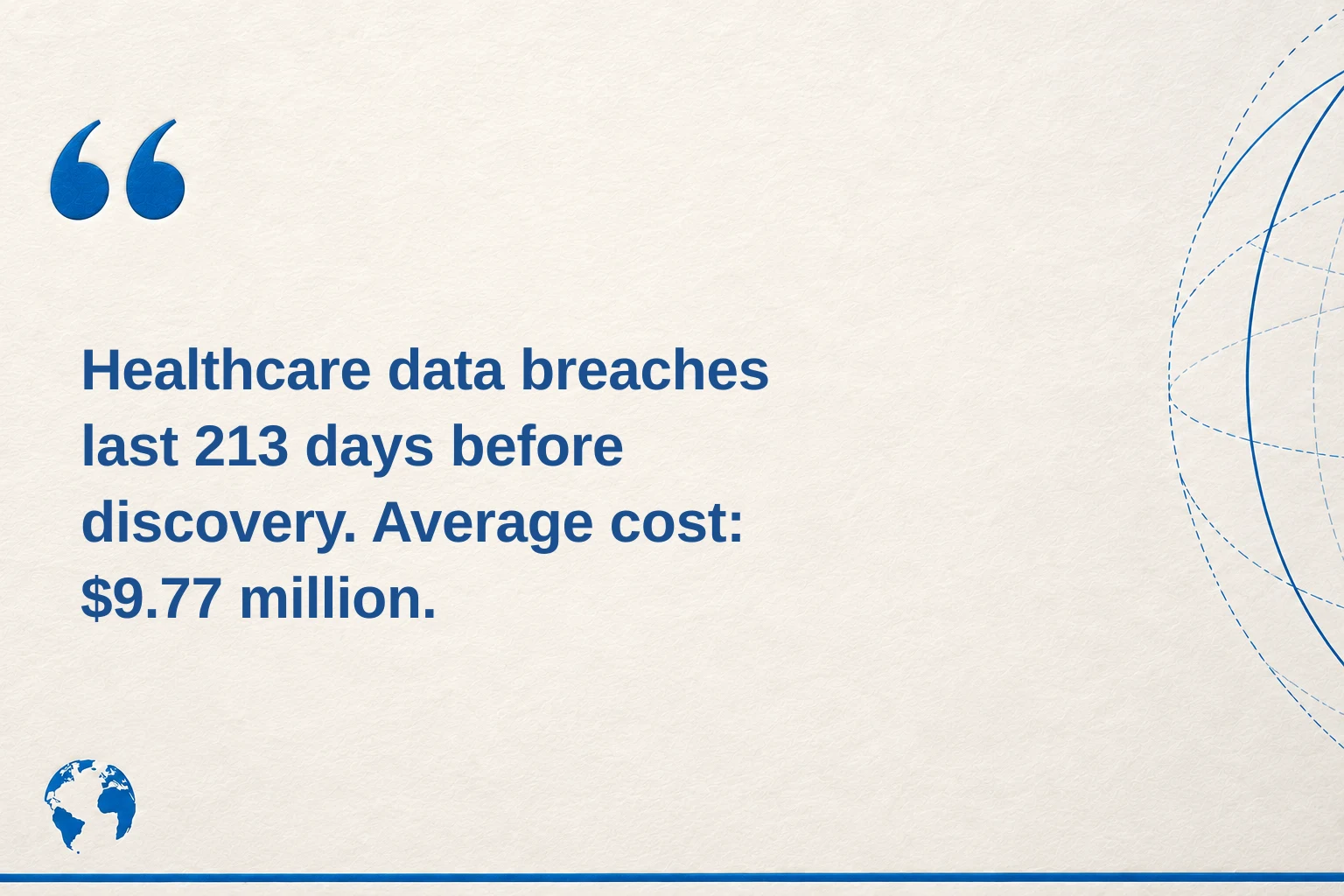
The financial exposure is not theoretical. Healthcare saw the most expensive data breaches across all industries, with average breach costs reaching $9.77 million, a July 30 report from IBM found. As the IBM analysis puts it: “Healthcare data breaches typically last 213 days before discovery, more than the average of 194 days across other industries.”
When a PE buyer runs compliance diligence on a behavioral health platform, the HIPAA review has a predictable shape. The buyer’s counsel asks for the SRA, the risk register, the last two years of incident logs, the full BAA inventory with executed copies, workforce training completion data, a sample of audit logs showing termination lockouts within an SLA, and the OCR breach portal history. Findings surface in two places: the Quality of Earnings as a reserve for remediation and insurance repricing, and the legal diligence memo as a specific indemnity ask. Missing SRA? Expect a holdback. Expired BAAs with the EMR? Expect a reps-and-warranties exclusion. A reportable breach that was never reported? That is a deal-pauser, not a line item.
Frequently asked questions
Does 42 CFR Part 2 apply to my behavioral health program if I only treat mental health and not substance use?
Generally no, but check the corporate structure. If any affiliated program within the same legal entity holds itself out as providing SUD services and receives federal assistance, Part 2 attaches to that program’s records. Mixed MH/SUD charts in a shared EMR often pull the whole workflow into Part 2 territory, which is why segmentation matters.
How often does OCR require a HIPAA Security Risk Analysis to be updated?
The Security Rule does not set a fixed calendar, but OCR expects the SRA to be accurate and current. Operationally, update annually and after any material change: new EMR, new service line, M&A event, relocation, or significant incident. Enforcement patterns show stale or missing SRAs cited repeatedly as a root cause.
What must be in a Business Associate Agreement with an EHR or billing vendor?
At minimum: permitted uses and disclosures, safeguard obligations, subcontractor flow-down, breach notification with a defined timeline, access and amendment support, audit rights, data return or destruction at termination, and (for behavioral health) a Part 2 redisclosure clause where applicable.
What are the breach notification timelines under HIPAA and how do they interact with Part 2?
Under HIPAA, individuals must be notified without unreasonable delay and no later than 60 days from discovery, HHS must be notified within 60 days for breaches affecting 500 or more individuals (annually for smaller breaches), and prominent media must be notified for breaches of 500+ in a state or jurisdiction. The 2024 Part 2 Final Rule aligned Part 2 breach notification with the HIPAA/HITECH standard, so the two no longer run on separate tracks.
How did the 2024 Part 2 Final Rule change consent requirements for SUD records?
After the 2024 final rule, a single consent can authorize TPO uses and downstream HIPAA redisclosures, but Part 2 still bars using SUD records against a patient in legal proceedings without consent or a qualifying court order. Programs still have to provide the redisclosure notice and comply by the February 16, 2026 deadline.
References
- HHS Office for Civil Rights, HIPAA Enforcement Highlights
- HHS OCR Annual Reports to Congress on HIPAA Compliance and Data Breaches, 2024
- Federal Register: Confidentiality of Substance Use Disorder (SUD) Patient Records, 2024 Final Rule
- SAMHSA, Confidentiality Regulations: 42 CFR Part 2
- NIST SP 800-66 Revision 2, Implementing the HIPAA Security Rule
- IBM, Cost of a Data Breach: The Healthcare Industry
- Healthcare Dive, Average cost of healthcare data breach nearly $10M in 2024 (IBM/Ponemon)
- Florida Statutes § 394.4615, Clinical Records; Confidentiality
- Texas Health & Safety Code Chapter 611, Mental Health Records