



Table of Contents
Ready to See Results?
From strategy through execution, Atlantic Health Strategies integrates compliance, operations, and growth into durable, measurable results. Let’s put our expertise to work for your organization.
Answer First: Why the January 2026 D.C. Council Hearing Matters to Every Public Inpatient Operator
Short answer: Staff and patient advocates told a D.C. Council committee in late January 2026 that St. Elizabeths, the District’s only public psychiatric hospital, is “riddled with problems such as daily physical assaults on patients and staff, medication mismanagement, and the warehousing of patients cleared for discharge”, and the hearing has pushed the facility toward enforceable oversight tied to measurable safety metrics. For behavioral health operators outside D.C., the operator-side lesson is concrete. When restraint volume, assault trends, and vacancy counts all move in the wrong direction together, surveyors and policymakers stop accepting performance improvement plans and start writing corrective-action mandates.
Those three complaints reported by Washington Post reporter Jenna Portnoy are not three separate problems. They are three symptoms of the same operational disease.
Two facts ground the picture. The facility’s federal-oversight history is not new. Following a 2005 DOJ review, the District Government and the Department of Justice on June 25, 2007 signed a Settlement Agreement outlining how the District would address alleged deficiencies, and in October 2011 the parties entered into a modified Agreement that suspended monitoring on approximately 115 requirements due to sustained compliance and extended the term through September 30, 2012, with a subsequent year of continued monitoring. The 2026 hearing is the second cycle, roughly a decade after the first one closed.
Why St. Elizabeths Is a Bellwether for Public Psychiatric Operations
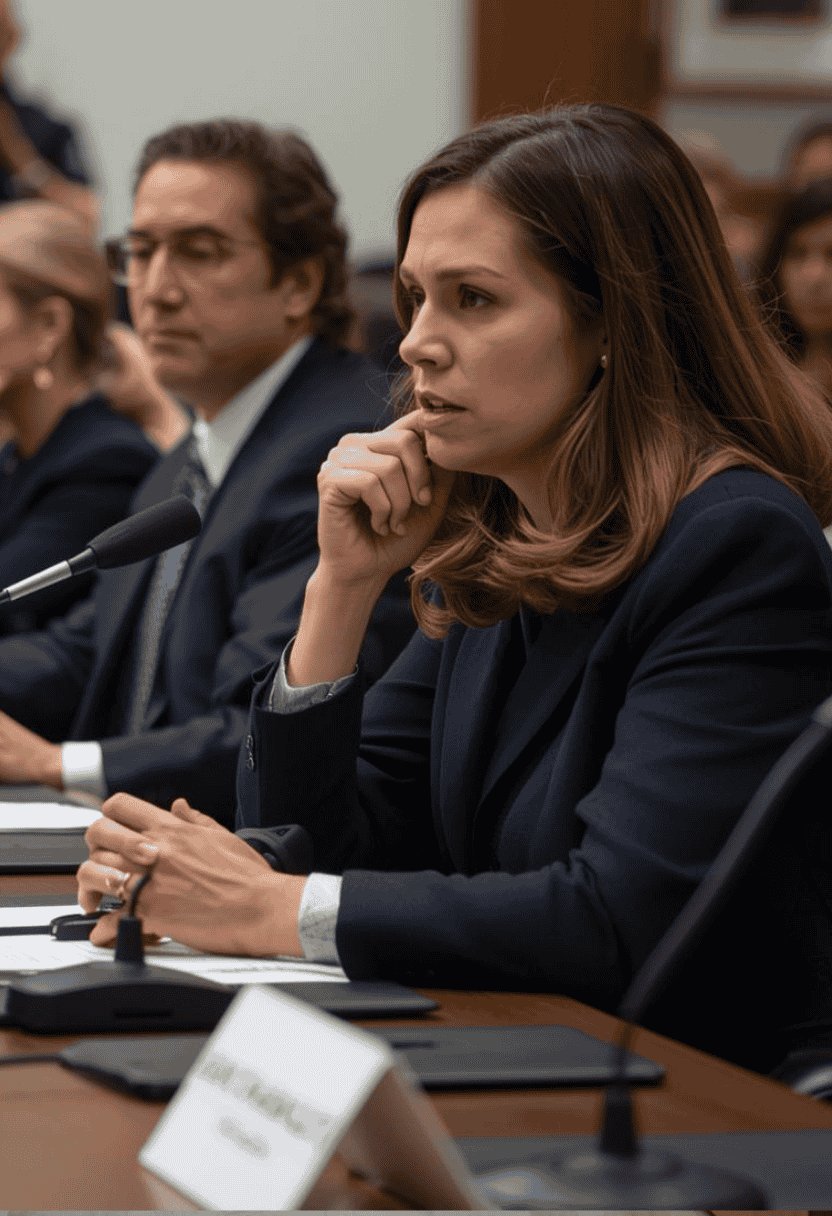
St. Elizabeths occupies a structural role that magnifies operational failure. The D.C. Department of Behavioral Health describes the hospital as the District’s public psychiatric facility for individuals with serious mental illness who need intensive inpatient care, and it also treats patients committed by the courts. The facility is the endpoint for patients who cannot be safely served in community settings the moment they present.
The scale of District investment matters. Councilmember Christina Henderson’s Committee on Health FY2025 budget recommendations approved proposed increases of $9,372,000 in operating funds and $7,280,000 in capital improvements for Saint Elizabeths Hospital. Those dollars put every incident, every vacancy, and every restraint episode against a public price tag Council members can point to at a hearing.
The assault trend has been visible for years. FOX 5 DC reported after a 2019 attack on a 71-year-old nurse that, according to data provided by the city, there were more than 520 assaults on staff last year by patients, and since 2014 there have been nearly 3,000 assaults. Six years later, staff were back before the Council saying the picture had gotten worse.
Executives running public psychiatric hospitals in Florida, Texas, and Tennessee that are absorbing more forensic referrals from courts and jails should read St. Elizabeths as a preview of what governance failure looks like when the patient mix outpaces the operating model.
Staffing Vacancies Change the Clinical Physics of the Unit
Testimony at the hearing pointed to staffing vacancies as a central driver. Unit leaders lose the ability to run programming hours when mental health workers, nurses, and clinicians are missing. Therapeutic contact becomes inconsistent. Early agitation gets met with delayed response and physical intervention instead of de-escalation. Documentation slips.
The federal standard is not subtle. Under 42 CFR 482.13(e), CMS states that “restraint or seclusion may only be imposed to ensure the immediate physical safety of the patient, a staff member, or others and must be discontinued at the earliest possible time.” When restraint or seclusion is used for the management of violent or self-destructive behavior, the patient must be seen face-to-face within 1 hour after the initiation of the intervention. Orders for the use of restraint or seclusion must never be written as a standing order or on an as needed basis (PRN). That 1-hour evaluation becomes harder to execute flawlessly when the unit is short two technicians and a charge nurse.
For psychiatric hospitals specifically, 42 CFR 482.62 requires that the staffing pattern must insure the availability of a registered professional nurse 24 hours each day, and that there must be adequate numbers of registered nurses, licensed practical nurses, and mental health workers to provide the nursing care necessary under each patient’s active treatment program. CMS surveyors evaluate compliance using Appendix AA of the State Operations Manual alongside Appendix A. When a facility is persistently short-staffed at the levels reported at the hearing, surveyors do not weigh recruitment difficulty. They document a Condition of Participation gap.
Operators AHS works with in Florida, Texas, and Tennessee treat staffing as a control system, not a budget line. Executives set competitive pay. Directors of nursing build predictable scheduling, unit-level supervisor competency, structured orientation for high-acuity environments, and a real-time feedback loop from incident data to staffing decisions. If a facility’s vacancy rate crosses 15% while restraint utilization climbs in parallel, a CMS surveyor does not need a hearing to draw the line.
Council Members Are Choosing Between Performative and Operationally Serious Oversight
The most consequential takeaway is the shift toward oversight as a governing strategy. Councilmember Christina Henderson has been vocal about the District’s over-reliance on private psychiatric capacity. At a 2024 hearing on the Psychiatric Institute of Washington, Washingtonian reported that Henderson said “nearly six in ten people involuntarily committed to DC’s mental-health system are sent to PIW”, which puts even more pressure on St. Elizabeths for the highest-acuity forensic population.
DC Health director Ayanna Bennett testified in 2024 that the city’s mental-health regulations do not provide “much specificity around patient safety” at psychiatric institutions, calling it “one of the things that I consider a regulatory hole.” That is a regulatory hole Council members can either close or leave open.
Council members can run an oversight process that is performative, or Council members can run one that is operationally serious. The difference is whether someone defines enforceable expectations tied to measurable outcomes. Executives running operationally serious oversight name the metrics and the cadence: assault rates normalized by census and acuity; restraint and seclusion utilization stratified by unit; staff vacancy and overtime trends; time to incident response; programming hours delivered; and discharge flow data showing whether patients are being held beyond clinical readiness.
The pattern at St. Elizabeths is not new. A 2005 DOJ CRIPA findings letter documented that St. Es “fails to release patients from seclusion and restraint when they are no longer a danger to themselves or others” and cited a pattern of PRN medication misuse. The 2026 hearing is the regulatory system catching up to a trajectory that has been visible for more than two decades.
What Behavioral Health Executives Should Take From This Story Now
For CEOs, CMOs, and compliance officers running inpatient psychiatric or residential withdrawal management facilities, the St. Elizabeths story is a regulatory case study, not a District-specific scandal. Five moves are worth making this quarter.
- Board members should review restraint and assault data as governance metrics, not just clinical metrics. Review them monthly, stratified by unit and shift. When the trend line moves the wrong way for two consecutive quarters, CEOs should escalate.
- Executives should tie staffing analytics to incident analytics. If a facility’s vacancy rate climbs past 15% and restraint volume climbs in parallel, surveyors will draw the line. CEOs should draw it first.
- Compliance officers should pressure-test 42 CFR 482.13 documentation. The 1-hour face-to-face, the alternatives attempted, the response to intervention. Standing and PRN orders for restraint or seclusion are prohibited. If the charts cannot withstand a CMS survey today, they will not withstand a hearing tomorrow.
- CMOs and utilization-management leaders should treat discharge flow as a safety variable. Holding patients past clinical readiness keeps acuity high and units volatile. That is a quality, rights, and risk issue at once.
- Executives should map governance against 42 CFR 482.62. The staffing requirement is a Condition of Participation. Public hospital operators in Florida, Tennessee, and other states with growing forensic populations should confirm the nursing pattern, therapeutic-activities program, and clinical leadership structure meet the federal standard before a surveyor confirms it for them.
The District’s situation will resolve in some direction over the next 12 to 18 months. Operators who learn from it now will not be the ones reading their own version of this story in 2027.
Frequently asked questions
What federal regulation governs restraint and seclusion in psychiatric hospitals?
42 CFR 482.13(e) is the Condition of Participation that controls restraint and seclusion in any hospital participating in Medicare or Medicaid. Under the rule, restraint or seclusion may only be imposed to ensure the immediate physical safety of the patient, a staff member, or others, and must be discontinued at the earliest possible time. The rule requires a face-to-face evaluation within 1 hour after initiation for violent or self-destructive behavior, and it explicitly prohibits standing or PRN orders for restraint or seclusion.
What does CMS require for staffing in a psychiatric hospital?
Under 42 CFR 482.62, a psychiatric hospital must have a qualified director of psychiatric nursing services, availability of a registered professional nurse 24 hours each day, and adequate numbers of RNs, LPNs, and mental health workers to deliver nursing care under each patient’s active treatment program. CMS surveyors evaluate compliance through the State Operations Manual, Appendix AA (Psychiatric Hospitals) alongside Appendix A (Hospitals).
Why is a rising restraint rate a regulatory red flag and not just a clinical metric?
Restraint volume sits at the intersection of patient rights (42 CFR 482.13), staffing adequacy (42 CFR 482.62), and quality governance. When restraint counts climb while staffing vacancies climb in parallel, surveyors read the pattern as a Condition of Participation failure, not a training gap. That is exactly the kind of data that reaches Council hearings and CMS complaint investigations.
What is the history of federal oversight at St. Elizabeths Hospital?
The Department of Justice opened a CRIPA investigation of St. Elizabeths in 2005 and issued a findings letter documenting deficiencies in psychiatric assessment, treatment planning, and use of restraint, seclusion, and PRN medication. The District and DOJ signed a Settlement Agreement on June 25, 2007. In October 2011, the parties entered a modified Agreement that suspended monitoring on approximately 115 requirements based on sustained compliance and extended the term through September 30, 2012, with a subsequent year of continued monitoring. The 2026 Council hearing represents the second oversight cycle, roughly a decade after the first one closed.
References
- The Washington Post: St. Elizabeths hospital in D.C. Criticized for safety and security (January 24, 2026)
- D.C. Department of Behavioral Health: Saint Elizabeths Hospital and the US Department of Justice Settlement Agreement
- U.S. Department of Justice, Civil Rights Division: CRIPA Investigation of St. Elizabeths Hospital Findings Letter
- eCFR: 42 CFR 482.13 – Condition of Participation: Patient’s Rights (Restraint and Seclusion)
- eCFR: 42 CFR 482.62 – Special Staff Requirements for Psychiatric Hospitals
- FOX 5 DC: Brutal Southeast DC hospital attack prompts call for change (2019)
- Washingtonian: Inside DC’s Troubled Psychiatric Hospital (2025)