



Table of Contents
Ready to See Results?
From strategy through execution, Atlantic Health Strategies integrates compliance, operations, and growth into durable, measurable results. Let’s put our expertise to work for your organization.
Treat growth as a licensure and accreditation event, not just a revenue event
Operators who scale a behavioral health organization without losing compliance treat every new bed, program, or location as a licensure and accreditation event first, and a revenue event second. That means centralized policies, a single EMR instance, disciplined utilization review, and a state-by-state licensing roadmap are in place six to twelve months before census growth, not after. The ones who invert that order end up on an HHS-OIG Corporate Integrity Agreement, in a payer Special Investigations Unit audit, or on a provisional accreditation they have to disclose in diligence.
The demand pressure is real. In 2023, 48.5 million people aged 12 or older (17.1 percent of the population) had a substance use disorder in the past year, including 28.9 million with an alcohol use disorder and 27.2 million with a drug use disorder, according to SAMHSA’s National Survey on Drug Use and Health. That is the tailwind every founder is chasing. It is also the number that gets you into trouble when you open a second state before your compliance program can carry the first one.
The scaling zone, roughly $10M to $75M in revenue, is where organizations get into OIG trouble, payer audit trouble, or accreditation trouble. Below $10M you can still run a facility out of a binder. Above $75M you usually have a General Counsel and a VP of Compliance. In between, the gap is the problem.
Centralize policy, EMR, and UR before you add the second site

Three systems have to be centralized before a second location opens: the policy library, the EMR instance, and utilization review governance. If each site writes its own policies, picks its own EMR tenant, or lets clinical leadership negotiate length of stay with payers in isolation, you have built a holding company, not a platform.
Policies. One master policy and procedure set, version-controlled, with a documented review cadence. The Joint Commission’s Behavioral Health Care and Human Services standards and CARF International both expect site-specific implementation of a common framework. Surveyors at the second site will ask how you know the first site’s policies are being followed. The honest answer is an internal audit calendar, not a verbal assurance.
EMR. A single instance with role-based access, audit logging, and a termination workflow that removes access in minutes. 42 CFR Part 2 and the HIPAA Privacy and Security Rules at 45 CFR Parts 160 and 164 do not forgive the second site because your IT team was busy with the first. SAMHSA has been clear that Part 2 consent and redisclosure rules travel with the record across any affiliated entity.
UR. One utilization review committee, one set of placement criteria using the ASAM Criteria, 4th Edition, and one person accountable for concurrent review documentation across every program. Length-of-stay decisions cannot be a site-level art form once you have more than one site. Payers notice. So does OIG.
Multi-state licensure: Florida, New Jersey, Pennsylvania, Texas are not interchangeable
Every state single state agency writes its own rulebook, and the rulebooks fight each other. Florida DCF enforces Chapter 65D-30 for substance abuse providers. New Jersey DMHAS licenses under N.J.A.C. 10:161B. Pennsylvania DDAP has its own licensing regulations for drug and alcohol treatment. Texas HHSC runs chemical dependency treatment facility licensing out of a separate code set entirely. A policy that satisfies Florida will fail New Jersey on staffing ratios, physical plant, or clinical documentation requirements.
Time-to-licensure matters more than most pro formas assume. In my experience, a clean Florida 65D-30 license takes four to six months from application to provisional, assuming the EOC tour goes well and the clinical leadership resumes hold up. Pennsylvania and New Jersey routinely run longer. If your pro forma assumes a 90-day ramp in a new state, your pro forma is wrong.
The DEA layer compounds this. If you are adding buprenorphine prescribing, the DEA registration workflow under the Consolidated Appropriations Act, 2023 (the MAT Act) removed the X-waiver but did not remove the registration, state controlled substance registration, or practitioner credentialing work. Add CMS Conditions of Participation and No Surprises Act notice obligations on top, and the licensing roadmap becomes a project plan with real dependencies, not a checklist.
Compliance infrastructure is a valuation driver, and OIG settlements prove it
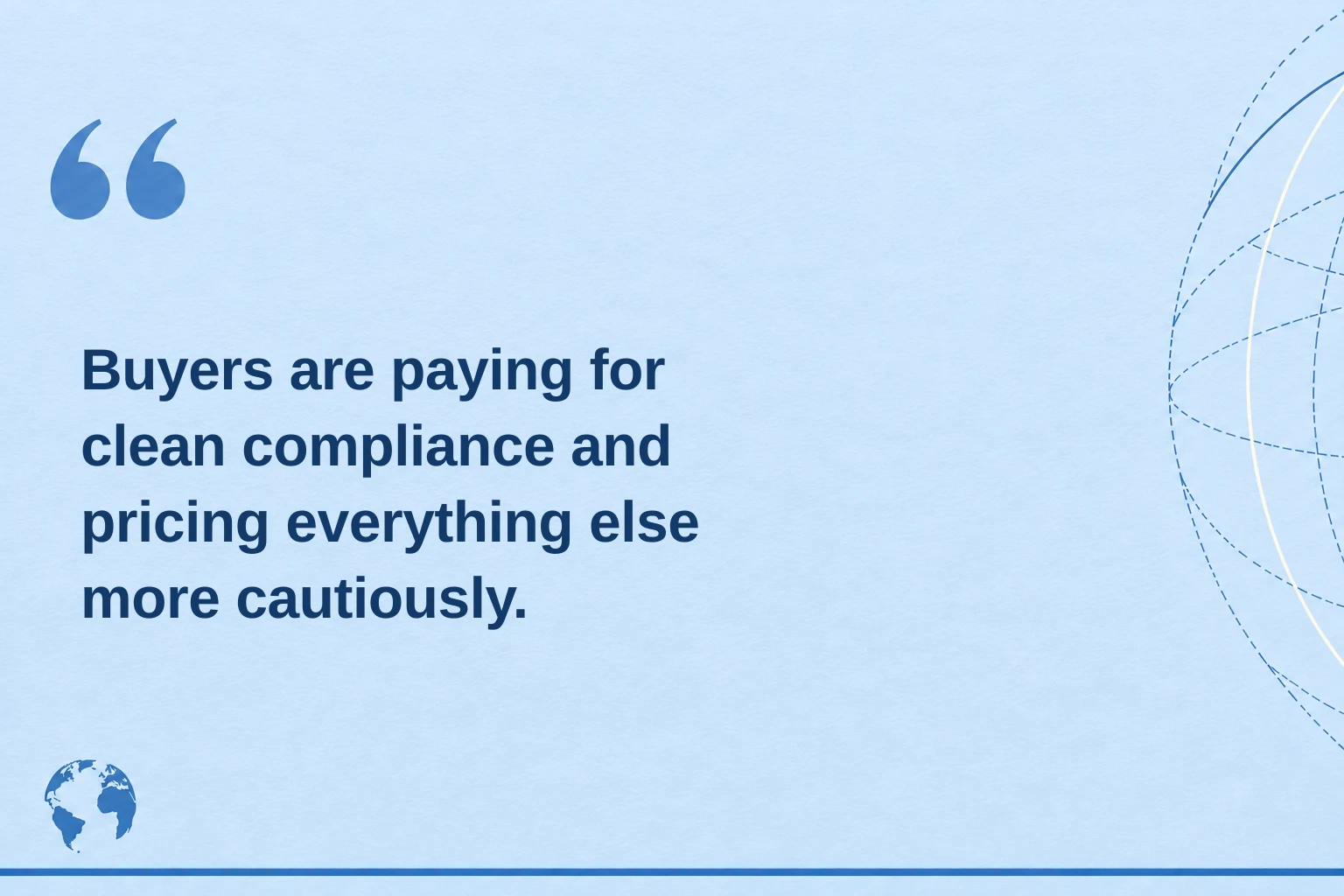
Private equity buyers and strategic acquirers are pricing compliance infrastructure directly into multiples. Mertz Taggart Managing Partner Kevin Taggart put it bluntly in the firm’s recent M&A report: “Buyers with capital are being deliberate, paying up for clean, in-network, growing businesses and being more diligent on everything else.” That spread between clean and messy is where the exit math lives.
The volume context: traditional behavioral health M&A volume declined to the lightest quarter for closed deals in Mertz Taggart’s data set going back to 2022, and buyers are paying for in-network, growing outpatient practices and pricing Medicaid exposure more cautiously. Translation for an operator: sellers who cannot show clean payer contracts, clean UR files, clean 42 CFR Part 2 handling, and clean state licensure histories are getting discounted or passed over.
The enforcement side tells the same story from the other direction. Oglethorpe Inc., a Tampa-headquartered psychiatric hospital operator, along with its founder, CEO, and COO, agreed to pay $32 million to resolve False Claims Act allegations that from 2021 through the present, they knowingly failed to return Medicare overpayments their own consultants had identified for beneficiaries admitted to Ridgeview Behavioral Hospital, Georgetown Behavioral Hospital, and The Woods at Parkside who did not qualify for inpatient psychiatric care. In a separate September 2024 settlement, a health care company operating inpatient behavioral health facilities in multiple states agreed to pay $19.85 million to resolve allegations that it submitted false claims to government health care programs.
Those are not isolated numbers. They are the direct product of growth that outran the compliance program. A diligence team will find the same documentation gaps that OIG found. The difference is OIG writes a settlement, and a buyer writes a lower LOI. Build to the standards in HHS-OIG’s compliance program guidance and the NAATP ethics code before diligence, not during it.
Frequently asked questions
When should I hire a dedicated compliance officer as we grow?
Before you open the second location or cross roughly $8M to $10M in annual revenue, whichever comes first. A part-time clinical director doubling as compliance officer is fine at one site. At two sites, that person misses an incident report, a Part 2 breach notification, or a payer SIU audit letter, and you have a problem that is larger than the salary you avoided.
Do I need separate accreditation surveys for each new location?
Yes. Both The Joint Commission and CARF survey each service location. You can operate under a single corporate accreditation framework, but surveyors walk every site, do an EOC tour at every site, and review charts at every site. Plan for an initial survey within the first six months of operations at each new location and budget for mock surveys ahead of each one.
How do multi-state operators handle conflicting state licensure requirements?
You write to the strictest standard and build state-specific addenda. One master policy set, then a Florida addendum for 65D-30, a New Jersey addendum for N.J.A.C. 10:161B, a Pennsylvania addendum for DDAP, and so on. The alternative, letting each state operate on its own policy library, is how you end up explaining to a surveyor why two of your facilities have contradictory seclusion and restraint language.
What compliance infrastructure do PE buyers look for in diligence before a platform add-on?
Centralized policy library with version control, a single EMR instance with audit logs, UR committee minutes and medical necessity documentation samples, state license files with no lapses or provisional findings, accreditation history, payer contracts with effective dates and timely filing provisions, HIPAA and 42 CFR Part 2 risk assessments within the last twelve months, an OIG exclusion screening log, and a compliance officer org chart. Missing any of those extends diligence by weeks and softens the price.
How do I expand service lines (PHP, IOP, detox) without triggering a full re-licensure?
It depends on how the state writes its license categories. Some states license by level of care, so adding PHP (ASAM Level 2.5, an outpatient level) to an IOP license is an amendment, not a new application. Adding a residential detox level is almost always a new license, a new physical plant review, and in many states a new Certificate of Need analysis. Call the state agency before you sign a lease. I have watched operators sign a building, then learn the state will not license detox at that address.
References
- SAMHSA, Key Substance Use and Mental Health Indicators in the United States: Results from the 2023 National Survey on Drug Use and Health
- Mertz Taggart, Q2 2026 Behavioral Health M&A Report
- Behavioral Health Business, Behavioral Health Dealmaking Down 20% in the First Half of 2026
- U.S. Department of Justice, Oglethorpe Inc. And Top Executives Agree to Pay $32M to Resolve False Claims Act Allegations
- Gibson Dunn, False Claims Act 2024 Year-End Update
- HHS-OIG Compliance Program Guidance
- 42 CFR Part 2, Confidentiality of Substance Use Disorder Patient Records
- American Society of Addiction Medicine, The ASAM Criteria
- The Joint Commission, Behavioral Health Care and Human Services Accreditation