



Table of Contents
Ready to See Results?
From strategy through execution, Atlantic Health Strategies integrates compliance, operations, and growth into durable, measurable results. Let’s put our expertise to work for your organization.
The Short Answer: What Utah Actually Authorized
Yes. On January 6, 2026, Utah became the first U.S. State to legally authorize an autonomous AI system to renew certain prescriptions without a physician signing every order. The Utah Department of Commerce’s Office of Artificial Intelligence Policy (OAIP) approved a 12-month pilot with health-tech company Doctronic, running inside the AI regulatory sandbox the Utah Legislature created in 2024 under SB 149, chief-sponsored by Senator Kirk Cullimore and signed by Governor Spencer Cox in March 2024.
The pilot is narrow on purpose. Under the mitigation agreement, Doctronic’s AI can process 30-, 60-, or 90-day renewals for medications a licensed provider already prescribed. Controlled substances, pain management medications, ADHD stimulants, and injectables are excluded. During Phase 1, a licensed physician reviews every AI-generated renewal before it reaches a pharmacist. The eligible drug list runs to 192 medications for chronic conditions like hypertension, diabetes, and depression.
Senator Cullimore framed the partnership around the principle of “doctor, not device.” That is the whole game. Utah regulators are testing what the legislature can later codify or kill based on data.
What the AI Can and Cannot Do

Doctronic’s platform is not practicing medicine in any expansive sense. It executes rule-based renewals against a predefined formulary. Eligible categories include statins, antihypertensives, psychiatric maintenance medications, and birth control. New prescriptions, dose changes, and controlled substances all route to a human clinician.
OAIP structured the rollout in phases. Phase 1 caps enrollment with physician review before renewals are issued; Phase 2 expands the program to 1,000 patients and introduces retrospective review. The office updated the transition criteria so each medication group becomes eligible to move to Phase 2 once Doctronic has filled 250 prescriptions in that group, subject to OAIP approval, and has since removed Butalbital and Flecainide from the formulary.
Two liability guardrails matter for operators watching this:
- Named physician requirement. Per OAIP, recipients of regulatory mitigation must employ a licensed physician whose name appears on AI-generated prescription renewals, and companies must maintain medical malpractice insurance that covers AI liabilities.
- Company-supplied match rate. Doctronic told Utah regulators the platform matched physicians’ treatment plans in 99.2% of cases. That figure moved the state. Read it skeptically. It is company-supplied data, not an independent clinical trial.
Why Utah Is Testing This Now
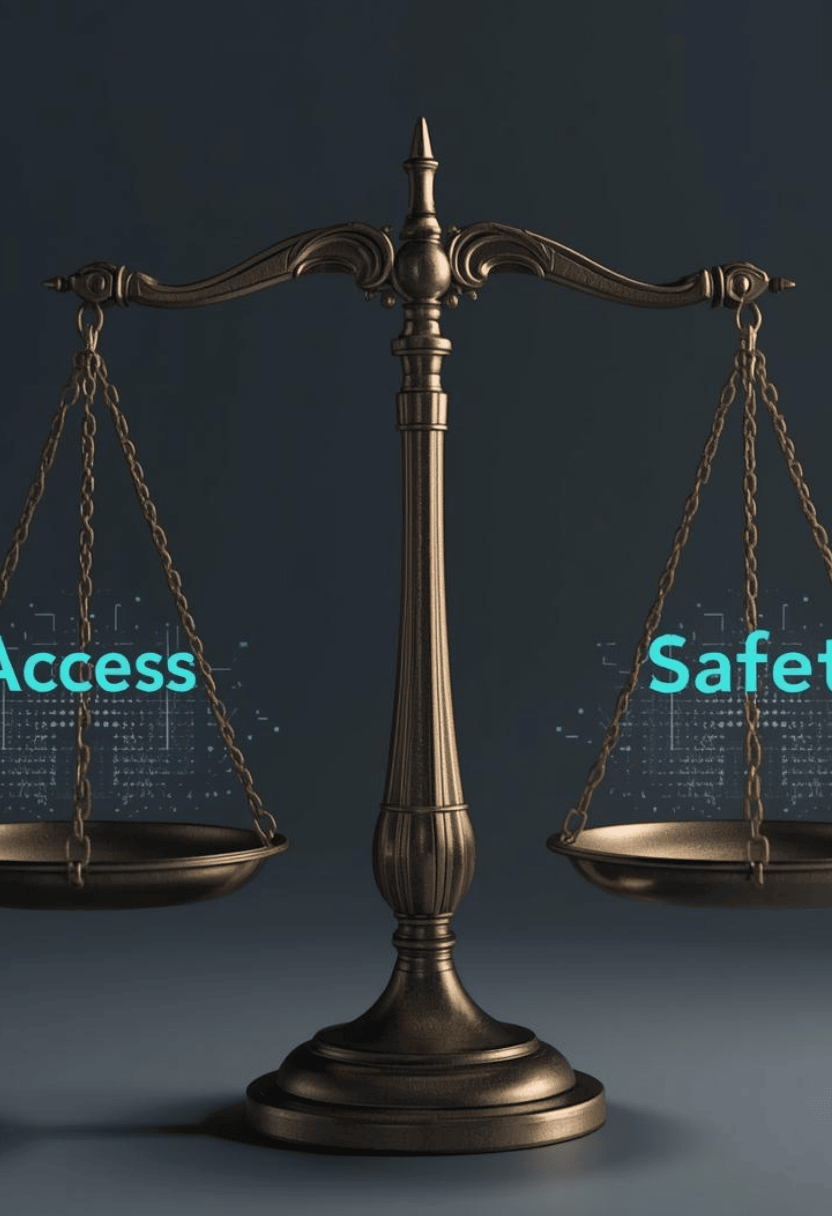
Utah’s rationale is access, not novelty. The Utah Department of Commerce announcement says prescription renewals account for roughly 80% of all medication activity, and renewal delays drive missed doses and avoidable spending.
The physician supply side is also under pressure. The Association of American Medical Colleges projects the United States will face a physician shortage of up to 86,000 physicians by 2036, including a shortfall of between 20,200 and 40,400 primary care physicians. Those numbers give state regulators political cover to test alternatives.
The dollar problem underneath all of this is medication non-adherence. Peer-reviewed estimates published in Annals of Pharmacotherapy by Watanabe and colleagues put the annual cost of drug-related morbidity and mortality resulting from nonoptimized medication therapy at $528.4 billion, equivalent to 16% of total US health care expenditures in 2016. Whether AI renewals actually move that number is what the pilot is supposed to measure.
Behavioral health leaders in Florida, Utah, Arizona, and Texas should stop treating this as a Utah-only story. The template travels.
The Compliance and Liability Questions This Raises
The pilot is narrow. The unresolved legal questions are not. A New England Journal of Medicine perspective published April 18, 2026 by Sara Gerke, Ravi B. Parikh, and I. Glenn Cohen asks whether Doctronic should have sought FDA premarket authorization as a medical device, and whether AI-based prescribing could constitute misbranding because prescribing must be done by “a practitioner licensed by law to administer such drug”.
Gerke put the federal question bluntly to Bloomberg Law, saying whether the statute’s language covers AI systems is “highly questionable”. A Health Affairs Forefront analysis by Eric Bressman, published April 17, 2026, argues we should be wary of the model Utah is establishing and notes the FDA has yet to authorize a single generative AI model. State sandbox authority does not waive federal statute.
Operators considering anything adjacent should track three risks:
- Accountability. If an AI-issued renewal harms a patient, liability could fall on the vendor, the supervising clinician, the platform, or the state. None of those pathways have been tested in court.
- Documentation. An AI-generated decision still has to satisfy payer SIU audits, accreditation surveyor focus, and medical record standards. Your utilization management file cannot say “the model decided.”
- Scope creep. Once renewal automation shows efficiency gains, pressure to expand drug classes will be relentless.
The blowback has already started. In an April 2026 letter, the Utah Medical Licensing Board said it only learned about the agreement after the plan had been launched and asked the state to halt the program. OAIP responded on April 21 defending its vetting process. Expect more adjustments as data comes in.
What This Signals for Behavioral Health Operators
Utah’s pilot is not the end of physician prescribing authority. State regulators are examining discrete clinical tasks (renewal, screening, intake) for automation potential rather than treating licensure as one indivisible bundle. Operators in Florida, Utah, Arizona, and Texas should assume similar mitigation-agreement frameworks are being drafted.
For behavioral health treatment centers, the executive move is not to adopt AI prescribing prematurely. Founders should build the governance scaffolding now, before payers and accreditors write the rules around them. That means:
- Written medical oversight policies for any AI-assisted clinical workflow.
- Vendor risk assessments that address FDA device classification.
- Audit-ready documentation standards that anticipate AI-generated decisions.
- Clinical leadership review of every tool before it touches a patient chart.
OAIP has committed to publishing pilot results publicly. Per the January 6 release, the pilot is tracking medication refill timeliness and adherence, patient access and satisfaction, safety outcomes, workflow efficiency, and cost impacts, with findings shared publicly to inform future state and federal AI policy.
If safety holds, similar pilots will follow. If a serious adverse event hits the news, the backlash will move fast and probably overcorrect. Either way, executives at treatment centers in Utah and other sandbox-curious states should be having this conversation at the board level now, not after a surveyor asks about it during a mock survey.
Frequently asked questions
Can AI legally prescribe medications in Utah?
AI cannot issue initial prescriptions in Utah. Under the OAIP regulatory mitigation agreement with Doctronic announced January 6, 2026, an autonomous AI system can renew a list of 192 pre-approved, non-controlled medications already prescribed by a licensed clinician, for 30-, 60-, or 90-day periods. Controlled substances, pain management medications, ADHD stimulants, and injectables are excluded. The pilot runs 12 months under Utah’s regulatory sandbox created by SB 149 (signed March 2024), with OAIP retaining an option to renew.
Does the Utah AI prescription pilot apply outside Utah?
No. The mitigation agreement waives Utah licensing rules only, and only Utah residents refilling eligible chronic medications can participate. State sandbox authority does not override federal law administered by the FDA or DEA, a point the April 18, 2026 NEJM perspective by Gerke, Parikh, and Cohen makes explicitly. Operators in Florida, Arizona, Texas, and other states should still track this as a template.
What are the compliance risks for behavioral health providers watching this pilot?
Three risks dominate. First, unsettled liability allocation between vendor, supervising clinician, and platform, though Utah requires participating companies to name a licensed physician on the prescription and to carry malpractice insurance covering AI risk. Second, documentation that has to satisfy payer SIU audits and accreditation surveyors even when a decision is AI-generated. Third, possible federal FDA device-classification or misbranding exposure flagged in the April 18, 2026 NEJM perspective and the April 17, 2026 Health Affairs Forefront analysis by Eric Bressman.
How safe has the pilot been so far?
As of OAIP’s April 2026 update, the pilot remains in Phase 1 with licensed clinician review required on every request, and OAIP had removed Butalbital and Flecainide from Doctronic’s formulary. Doctronic reported a 99.2% match rate against physician treatment plans in urgent care cases the company itself compared, though that is company-supplied data, not independent peer review. In April 2026, the Utah Medical Licensing Board formally challenged the program and Utah’s Department of Commerce responded on April 21 defending the mitigation-agreement vetting process.
References
- Utah Department of Commerce News Release: Utah and Doctronic Announce Groundbreaking Partnership for AI Prescription Medication Renewals (Jan. 6, 2026)
- Utah Office of AI Policy: Doctronic Regulatory Mitigation Agreement page
- Utah SB 149 (2024): Artificial Intelligence Amendments (Cullimore)
- Gerke S, Parikh RB, Cohen IG. Utah’s Prescription-Renewal Pilot Program. Autonomous AI Managing Patient Care. New England Journal of Medicine (April 18, 2026)
- Bressman E. AI Prescribing Medications In Utah: A Flawed Regulatory Playbook. Health Affairs Forefront (April 17, 2026)
- Bloomberg Law: Utah’s ‘AI Doctor’ Prescription Pilot Spurs Oversight Concerns
- STAT News: Utah medical board calls for immediate suspension of state’s AI doctor experiment
- Medscape: Utah Approves AI-Powered Prescription Renewal Program
- AAMC: New Report Shows Continuing Projected Physician Shortage (up to 86,000 by 2036)
- Watanabe JH, McInnis T, Hirsch JD. Cost of Prescription Drug–Related Morbidity and Mortality. Annals of Pharmacotherapy (2018)
- Stanford HAI: Utah’s Experiment With AI-Driven Prescription Renewals