



Table of Contents
Ready to See Results?
From strategy through execution, Atlantic Health Strategies integrates compliance, operations, and growth into durable, measurable results. Let’s put our expertise to work for your organization.
A Structural Escalation in Federal Healthcare Enforcement
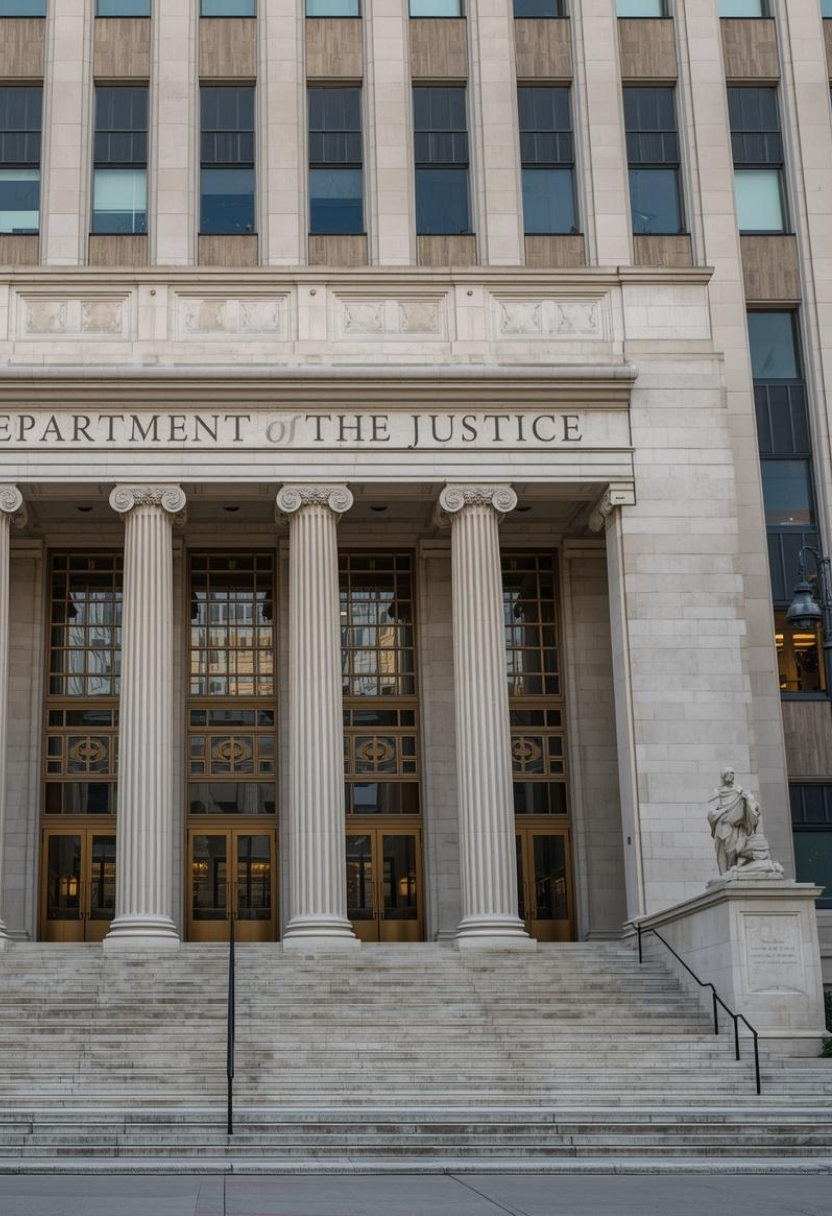
On January 8, 2026, the White House announced the creation of a new Department of Justice Division for National Fraud Enforcement, signaling a structural escalation in federal healthcare oversight. The new division is designed to centralize fraud enforcement efforts across agencies, elevate leadership accountability, and expand coordination among federal prosecutors and investigative bodies.¹
For behavioral health and addiction treatment providers billing Medicare, Medicaid, and other federal programs, this development represents more than administrative reorganization. It marks a strategic shift toward nationally coordinated enforcement with increased prosecutorial resources and data integration capabilities.
Treatment center executives should view this announcement as an early warning indicator of heightened audit exposure and enforcement velocity.
According to the January 8 White House announcement, the newly created DOJ Division for National Fraud Enforcement will consolidate fraud enforcement efforts under centralized leadership with authority to coordinate across federal districts and agencies.¹ The objective is to eliminate fragmentation in fraud investigations and improve efficiency in prosecuting complex, multi-state schemes.
Historically, healthcare fraud investigations were often initiated regionally, led by individual U.S. Attorney offices, or coordinated through task forces such as the Health Care Fraud Strike Force. The new division formalizes and elevates that coordination structure, creating a more streamlined enforcement pipeline.
This shift suggests faster information sharing, unified charging strategies, and reduced jurisdictional silos. For providers operating across multiple states, the implications are significant. Enforcement risk may no longer be isolated to a single district. Patterns identified in one jurisdiction could now trigger broader national review.
Why Behavioral Health Providers Should Pay Attention
Behavioral health remains a recurring focus of federal enforcement actions. The Office of Inspector General has repeatedly identified substance use disorder treatment, telehealth billing, and medical necessity documentation as areas of elevated risk.²
The creation of a centralized fraud enforcement division increases the likelihood that analytics-driven outlier detection will feed directly into coordinated investigations. Multi-site treatment platforms, particularly those operating detox, residential, PHP, and IOP services, may face expanded scrutiny if billing patterns diverge from national benchmarks.
Federal agencies increasingly rely on:
-
Predictive analytics
-
Cross-payer claims data comparisons
-
Medical necessity trend analysis
-
Telehealth utilization monitoring
-
Marketing and referral relationship investigations
With centralized leadership and multi-agency collaboration, enforcement timelines may compress. What once took years to escalate could now move more rapidly through investigative channels.
Multi-Agency Coordination and Broader Jurisdictional Reach
The White House announcement emphasized interagency coordination as a central objective of the new division.¹ That likely includes collaboration among the DOJ, the Department of Health and Human Services Office of Inspector General, CMS program integrity units, and potentially the FBI.
The Department of Justice and HHS have historically coordinated through the Health Care Fraud and Abuse Control Program, which has recovered billions annually through civil and criminal enforcement actions.³ A centralized division builds upon that framework by consolidating leadership and potentially aligning investigative priorities nationally.
For providers, this means data submitted to CMS, managed care organizations, or state Medicaid agencies may be evaluated within a more integrated federal enforcement ecosystem. Inconsistencies between documentation, billing, and supervision structures could be identified across jurisdictions.
What Treatment Center Executives Should Do Now
The creation of a National Fraud Enforcement Division does not automatically imply wrongdoing by providers. However, it does raise the stakes for compliance infrastructure.
Executives should immediately assess:
1. Documentation Integrity
Ensure treatment plans, progress notes, and discharge summaries consistently support medical necessity. Inconsistent documentation remains a leading driver of enforcement actions.²
2. Internal Audit Frequency
Quarterly claims audits and documentation reviews should become standard practice, particularly for high-acuity services such as detox and PHP.
3. Multi-State Compliance Alignment
Providers operating across states must standardize supervision ratios, billing protocols, and utilization management policies to reduce cross-jurisdictional risk.
4. Telehealth Oversight Controls
Telehealth remains under federal scrutiny. Organizations should confirm that remote service documentation and supervision practices align with payer requirements.
5. Marketing and Referral Transparency
Federal enforcement frequently targets improper inducements or referral arrangements. Compliance officers should review contracts and compensation models proactively.
Atlantic Health Strategies works with behavioral health and addiction treatment organizations to conduct proactive compliance audits, strengthen documentation frameworks, and prepare executive teams for elevated federal oversight. In an environment where fraud enforcement is now centralized at the national level, prevention is significantly less costly than response.

A National Priority With Local Consequences
The creation of the DOJ Division for National Fraud Enforcement signals that healthcare fraud is being treated as a centralized national priority rather than a series of regional enforcement efforts.¹ For behavioral health providers, particularly those dependent on federal reimbursement streams, this structural shift warrants immediate executive attention.
As federal agencies refine data analytics and interagency coordination, enforcement visibility will increase. Treatment centers that invest now in compliance infrastructure, audit preparedness, and documentation discipline will be better positioned to navigate the evolving landscape.
The message from Washington is clear. Fraud enforcement is no longer fragmented. It is centralized, coordinated, and prioritized at the highest levels of federal government.
References
-
The White House. Fact Sheet: Establishment of the Department of Justice Division for National Fraud Enforcement. January 8, 2026. https://www.whitehouse.gov/
-
Office of Inspector General. Work Plan: Oversight of Behavioral Health Services and Telehealth Billing. https://oig.hhs.gov/reports-and-publications/workplan/
-
U.S. Department of Health and Human Services and U.S. Department of Justice. Health Care Fraud and Abuse Control Program Annual Report. https://oig.hhs.gov/publications/docs/hcfac/